
Green Nationalism
A platform


As I ended my last article, I believe that there is an appetite for a green nationalism; a conservatism that conserves. I’ve put together a model platform for what this might look like in Canada. Along with policies meant to reduce dependence on the burning of hydrocarbons, there are other policies meant to conserve the ecology and culture of our nation. While I suspect some of the proposed policies will be less attractive than others to you, my reader, if there’s anything that you like in it, feel free to use it as you wish. I’ve also left out some very important policies, most notably those regulating AI.
As someone with some training in ecology (I have a Masters in Forest Conservation), I am confident that there are serious ecological shocks (leading to political shocks) coming globally over the coming decades. As expectations for quality of life increase amongst the worlds growing population the consumption of resources will continue to grow. But I am also a realist about potential political action and the limits of moralistic pressure and international agreements to avoid the worst (I wrote about this in a three part series, here, here and here). At this point there is no way we will avoid 2C warming, and we are on pace to pass that marker in a decade.
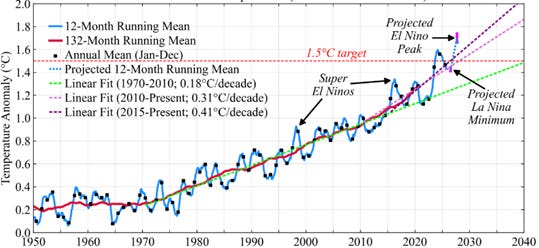
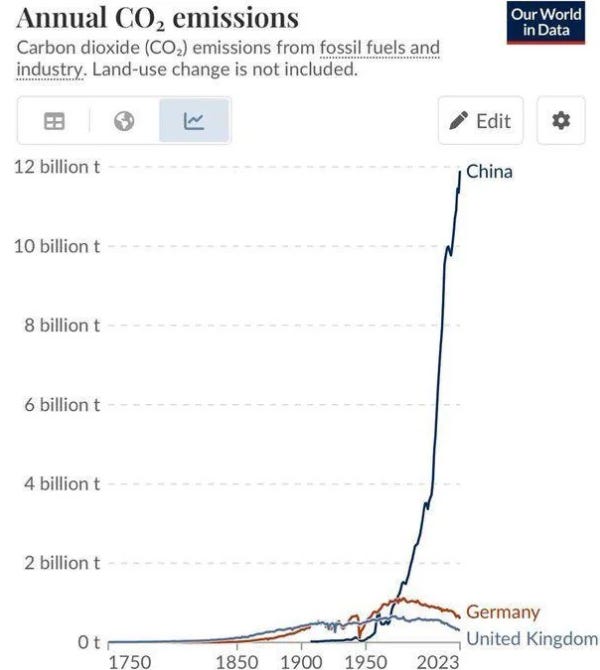
Even optimists about technology, or those who think the results of climate change won’t be too severe should want to hedge their bets by establishing as much national resilience as possible by insulating the domestic economy, and ecology in a way that prepares us both for the gradual end of burning of hydrocarbons, and the ecological and political shocks that are coming. There is no down side to doing so, since eventually demand for oil and gas will decline, and we will be better prepared for this inevitability, even if we must continue to use oil and gas in the meanwhile. Below are a set of policies that would strengthen us domestically, allowing for us to transition off of hydrocarbons while also preparing to endure the consequences of other players refusing to do so in a timely manner.
But this is not all about climate change; there are many other stressors on the environment due to increasing resource use from a growing population pursuing higher standards of living, and this platform attempts to build resilience against those strains as well.
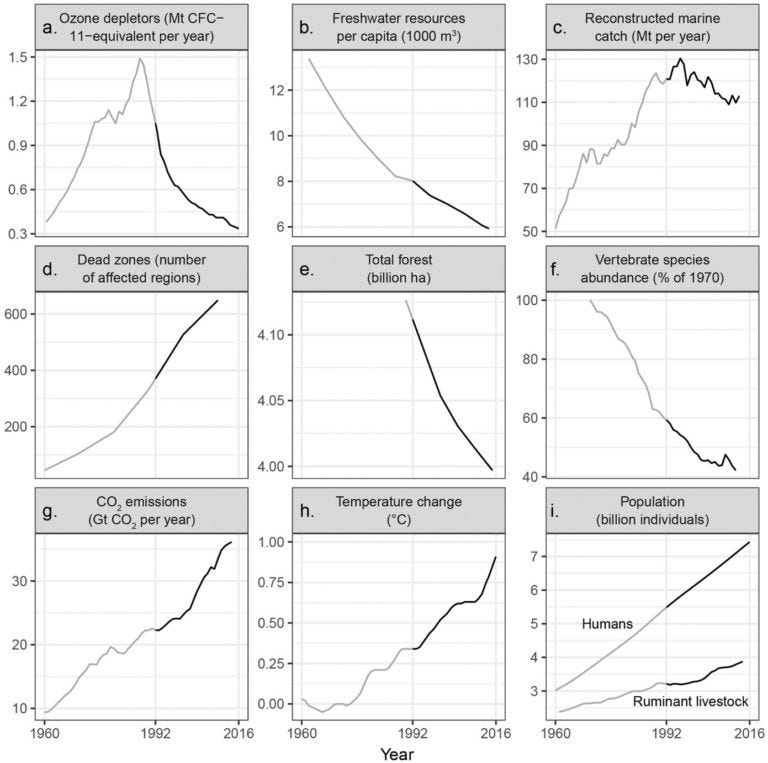
1) Energy independence: Canada has the resources to be energy independent, but doing so will require a large-scale realignment to east-west infrastructure rather than north-south infrastructure.
a massive nation-building project to construct high-voltage direct current, inter-provincial transmission lines. This would allow Quebec and Manitoba hydro to act as a clean "battery" for the rest of the country, stabilizing the grid as fossil fuels are phased out.
doubling Canada’s electricity generation capacity.
fast-tracking mining approvals (nickel, lithium, cobalt, copper and graphite) and building domestic processing plants so these materials can be transformed into batteries and components in Canada.
cultivating domestic capabilities to manufacture wind turbines, solar panels, and electrical grid components.
intermittent renewables (wind and solar) cannot carry the industrial load alone, especially during severe Canadian winters. To maintain absolute sovereignty without relying on fossil fuel backups, Canada must leverage its unique status as a tier-one nuclear power.
upgrading eastern refineries to process heavy-crude, or building new heavy-crude processing facilities domestically (so that Canadian oil can be used domestically throughout phase down).
securing a direct, high-capacity pipeline corridor from western extraction fields to eastern refining hubs to eliminate the need for oil imports.
2) National industrial policy: a state-led development strategy shifting Canada away from being a resource colony.
using state procurement rules and targeted capital subsidies, mandate that extracted lithium, nickel, cobalt, and copper are processed and manufactured into batteries, wind turbines, and Small Modular Reactor (SMR) components within domestic borders.
developing and building new technologies, including automation and green hydrogen
domestic content requirements that force global capital to build long-term industrial roots in Canadian communities.
shifting the oil-sands toward non-combustion chemical manufacturing (i.e. petrochemicals, advanced lubricants, carbon fibre, and asphalt).
deploying labor directly into geothermal, SMR deployment, and hydrogen infrastructure.
upskilling workers to meet the technical demands of a high-tech, electrified economy.
initiate a Manhattan-Project like effort to advance nuclear fusion technologies.
3) Strategic mineral reserves: establishing state-owned stockpiles of transition minerals.
4) Mandatory secondary material recovery: implementing laws that require 100% of high-value waste (electronics, batteries, specialized alloys) to be recycled within national borders.
5) Right to repair and longevity standards: mandating that products sold domestically must be repairable and durable, reducing reliance on foreign consumer goods and supporting a local “repair economy.”
replicate France's scoring system, which grades electronics and appliances from 1 to 10 based on five criteria: availability of technical documentation, ease of disassembly, availability of spare parts, price of spare parts, and product-specific factors.
under this system, for example, any smartphone, laptop, or home appliance scoring below a 6 out of 10 on the Canadian Repairability Index (see above) is legally classified as a "disposable consumer risk" and denied an import permit by the Canada Border Services Agency (CBSA).
expand the Energy Efficiency Act (banning certain energy inefficient products from entering the country) into a Product Durability and Eco-Design Act.
software obsolescence is a major driver of physical waste. Canada should ban the import of smart devices unless the manufacturer legally guarantees security and operational software updates for a minimum timeframe (e.g., 7 to 10 years).
prohibit the import of items that use proprietary screws or glues that prevent non-destructive disassembly.
ban parts pairing, requiring that imported devices accept generic or salvaged components without artificial software degradation.
6) Food sovereignty: securing food supply chains, and implementing standards of quality.
imposing high tariffs on imported food that doesn’t meet strict domestic ecological and/or quality standards, while subsidizing local farmers to transition to soil-building (carbon-sequestering) practices.
protecting indigenous crop varieties and ensuring the nation is not dependent on foreign-owned corporate patents for its food supply.
incentivizing young citizens to move into high-tech sustainable agriculture, replacing the need for migrant seasonal labor with automation and domestic youth employment.
Ban on building urban sprawl on existing farm land.
7) High-speed rail network: designed to make driving less of a necessity.
8) Hearth and Home pro-natalist policies: focused on affordability and reframing having children as a national service (see upcoming article).
9) Freeze on immigration: we are caught up in an unsustainable model of constantly growing population by means of immigration that also brain-drains top talent from developing countries.
10) Voluntary national service: can be in the military or doing reforestation/ecological restoration. One year service in Canada after high school.
11) Remove barriers to interprovincial trade
expand mutual recognition to encompass financial services, telecommunications, and heavy transport.
strip regulatory colleges of their protectionist licensing powers and implement automated, pan-Canadian credential recognition for high-demand fields like healthcare, construction, and education.
pass a full federal-provincial bypass of liquor board monopolies.
pass a unified, interprovincial trucking safety and weight standard.
pass an overriding federal statute that explicitly renders any provincial regulation null and void if its primary effect is to block the interprovincial flow of commerce to shield local businesses.
12) Combatting financialization: in order to increase investment in Research and Development (R&D), infrastructure and worker wages.
eliminating stock-based executive compensation.
imposing strict regulatory definitions of market manipulation that includes stock buybacks.
taxing capital gains, dividends, and corporate stock distributions at the same progressive rates to disincentivize stock buybacks.
13) Making ports more efficient: Canada suffers from high “port dwell times,” the time from when a ship docks, to when it leaves port again (is unloaded and loaded).
mandate and fund a single, national Port Community System (PCS)—similar to the highly efficient digital infrastructure used in Rotterdam or Singapore, which uses a shared digital ledger to track a container’s status in real-time allowing Synchronized Intermodal Scheduling.
aggressively expand on-dock rail capacity or build massive, automated "inland ports" outside the congested urban core.
regulatory frameworks via the Canadian Transportation Agency (CTA) could implement stricter, balanced Reciprocal Service Level Agreements (SLAs) that financially penalize railways for failing to provide scheduled rail cars to marine terminals, while conversely penalizing terminals for failing to load trains within strict windows.
transition high-volume gateways to round-the-clock gate operations.
implement peak-hour congestion pricing (similar to the "PierPass" system used at the Ports of Los Angeles and Long Beach) to smooth out truck flows across a 24-hour cycle.
require digital manifests and customs document packages to be submitted while the vessel is still crossing the ocean.
build dedicated, high-tech inspection and containment zones. This prevents specialized regulatory inspections from slowing down the flow of standard consumer and industrial containers nearby.
14) Ban on export of old growth timber: using Section 91(2) of the Constitution ban the international export of raw logs or wood products derived from trees verified to be over a certain age. This would target old growth harvesting in BC in particular.
15) Groundwater protection: using section 91 of the Constitution (Peace Order and Good Governance) pass a "Clean Water Backstop Act," establishing absolute minimum national standards for groundwater purity.
16) Age restrictions for social media and pornographic content

Nothing here that seems outrageous to me, and at least some of the electrical program Carney seems to be on board with, although implemention will take a while. Some of these energy plans might collide with others' ideas of what is urgent to protect, I imagine, requiring deliberation and consultation. Creating children as a national service--would that be in lieu of that year of another kind of unforced but encourage labour? I like the idea of a required gap year of service for high school graduates. Everyone would benefit from mixing our lives up in this way and instilling some national experience and pride. Some of course will want to travel to other places, but a year spent contributing to their home country would provide them with something to more to bring to the world at large. Meanwhile, sadly, Alberta seems to be in the process of distancing from the federation, if not outright pulling out, which would move them--and sadly us I fear-- closer to the south. All the more reason to strengthen our resolve, remember our values and identity, and implement your coherent platform--or at least work as hard as possible towards it. I wonder what you consider to be the most contentious part of your platform? Perhaps the direct pipeline to the east? I certainly favour way more legislation limiting and controling urban sprawl, the heartbreaking degradation of our river systems and the associated health of our cities. Living Cities require living water and space for all its plentiful attendant life. We have so many resources in this area, which we don't take care of the way we must. Thanks for the opportunity to think about some of this. I hope your platform gets out to the political world.
Lots of interesting ideas - many of which are new to me and in domains I haven't thought about!